
Water is at the intersection of climate change, biodiversity loss and pollution (UNEP, 2023). As these environmental effects worsen, so do the pressures on the water systems that underpin them. The emerging reality is that water is not just a component of healthy ecosystems, but the foundation of a healthy planet.
Water systems can act as natural checks against climate volatility. Underground aquifers store freshwater over long periods, helping communities and ecosystems withstand drought and increasingly variable rainfall. But when groundwater is depleted faster than it can recharge, that buffer weakens, increasing pressure on freshwater supplies. In coastal areas this heightens the risk of saltwater intrusion. (UNESCO, 2022).
A parallel consequence of water stress is biodiversity loss, with freshwater species among the most vulnerable. Since 1970, freshwater wildlife populations have declined by 83% (WWF, 2022). Meeting rising demand for freshwater can come with an environmental trade-off. Desalination provides a vital source of water for coastal regions facing scarcity, but conventional systems can consume significant energy and produce concentrated brine. Flocean, investee of Water Unite Impact, deploys desalination infrastructure on the seafloor, reducing its land footprint, and avoiding the discharge of brine back into the ocean.
Plastic pollution poses another threat to water systems. Uncollected waste can enter rivers and waterways, where it can persist and move through wider ecosystems and regions. Formalised waste collection and recycling chains can reduce the risk of plastic entering rivers and waterways. Water Unite Impact investee Mr Green Africa is transforming Kenya’s waste management through a network of Wastepreneurs (waste collectors). Their solution is to incentivise waste collection, turning plastics into rPET which can be sold to make new products. This scalable model strengthens water systems differently: intervening on plastic pollution before any of it enters waterways in the first place.
Why do intense floods often follow severe droughts?
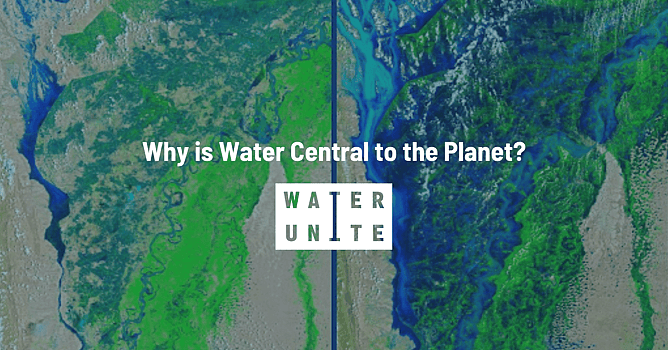
Catastrophic wet seasons are etched onto calendars in Pakistan. In recent years, flash floods have disrupted agriculture, communities and ecosystems. The 2022 monsoon alone submerged more than 100,000 square kilometers across the entire Indus Basin (NASA, 2022). Human-caused climate change has increased the likelihood of extreme heat in Pakistan, and with it, the conditions for severe flooding (World Weather Attribution, 2022). This volatile, whiplash weather points to a more uncertain future.
“Whiplash weather” describes rapid swings between prolonged dry periods and intense rainfall. A warmer atmosphere can hold more moisture, increasing the potential intensity of rainfall when it releases. Long dry-spells can leave soils hardened and less able to absorb heavy rainfall, resulting in surface runoff and the risk of flash flooding. Extreme weather events can no longer be understood or treated as isolated shocks. A UN report projects that global temperatures will temporarily exceed the 1.5°C threshold set under the Paris Agreement. Under that scenario, even if global temperatures return below 1.5°C, changes to water flows, rainfall patterns and ecosystems can persist long after (UNEP, 2026).
What works, and what doesn't
Extreme weather responses are based around conservation, and emergency supply and demand (Global Water Partnership, 2021). Restricting water usage and stockpiling goods might stretch regional supply, but it is not solving a problem that requires structural adaptation.
Consumer fixes are limited in their scope. After successive summer heatwaves, European imports of Chinese air conditioning units have risen by 72% (IEA, 2023). But in cooling households these units burn more energy, which raises temperatures, potentially reinforcing the very climate pressures that make them necessary.
Efficient water infrastructure can build resilience by working with natural systems instead. For example, protected watershed forests can prevent soil erosion, filter pollution from rivers and stabilise microclimates. The gap is between responding to water insecurity as it happens and investing in the systems capable of preventing its impacts from cascading.
Building a resilient planet
Pakistan's whiplash weather is only a microcosm of the bigger picture. The implications for ecosystems, aquatic life and river health are already clear. Climate change, biodiversity loss and pollution are placing increasing pressure on the water systems that sustain ecological resilience. On their own, current emergency fixes are not enough.
Climate investment will struggle to build resilience if it continues to overlook the critical link of climate effects and the connector of our ecological defences. Water demand is to outpace supply by 2030 with capital beginning to recognise water as mispriced (Economist Enterprise, 2026). The window in which to protect the planet, its biodiversity, freshwater species, and natural climate buffers, is narrowing.
At Water Unite we work to get funding to the solutions that can act within that window. Small contributions from everyday product sales, made through our corporate partners, are pooled and invested in enterprises working across water, sanitation and waste in emerging markets. The intention is for more capital to reach the water solutions that already work, in places conventional finance has overlooked.
Water is central to the planet because it connects the crises that threaten it. Climate change, biodiversity loss and pollution all intersect through the same water systems, which is why water is where the response should begin. The planet's health rests on what we choose to do about water today.
References
Pakistan Flood, 2022. (Image credit: NASA Earth Observatory images by Joshua Stevens, using Landsat data from the U.S. Geological Survey and VIIRS data from NASA EOSDIS LANCE, GIBS/Worldview, and the Joint Polar Satellite System (JPSS).)
Climate Policy Initiative. (2023). Global Landscape of Climate Finance 2023. Climate Policy Initiative. https://www.climatepolicyinitiative.org/publication/global-landscape-of-climate-finance-2023/
IEA. (2023). Global Cooling Watch 2023: Keeping it Chill. International Energy Agency. https://www.unep.org/resources/global-cooling-watch-2023
NASA Earth Observatory. (2022). Devastating Floods in Pakistan. NASA Earth Observatory / USGS / JPSS. https://science.nasa.gov/earth/earth-observatory/devastating-floods-in-pakistan-150279/
Samel, M. (2026). The cost of misvaluing water. Economist Enterprise. https://insights.economistenterprise.com/energy-environment/the-cost-of-misvaluing-water
UNEP. (2023). Spotlight on Nature and Climate: Water at the Nexus of Planetary Crises. United Nations Environment Programme. [no link found]
UNEP. (2026). Limiting Overshoot: Navigating Exceedance of 1.5°C and Pathways Towards Return. United Nations Environment Programme. https://www.unep.org/resources/limiting-overshoot-navigating-exceedance
UNESCO. (2022). The United Nations World Water Development Report 2022: Groundwater: Making the Invisible Visible. UNESCO Publishing. https://unesdoc.unesco.org/ark:/48223/pf0000380721
World Weather Attribution. (2022). Climate Change Increased Extreme Rainfall Triggering Severe Floods in Pakistan. WWA Synthesis Report. https://www.worldweatherattribution.org/climate-change-likely-increased-extreme-monsoon-rainfall-flooding-highly-vulnerable-communities-in-pakistan/
WWF. (2022). Living Planet Report 2022: Building a Nature-Positive Society. WWF International. https://www.worldwildlife.org/press-releases/69-average-decline-in-wildlife-populations-since-1970-says-new-wwf-report